The Gear You Dismiss Could Be the Gear That Saves You
The single most important thing skeptical outdoor enthusiasts can do right now is reconsider the survival tools they've written off as unnecessary, overcomplicated, or gimmicky—because the data on survival incidents consistently shows that dismissed gear is absent gear when emergencies strike.
In 2024, the American Alpine Club's Accidents in North American Climbing report documented that inadequate preparation—including missing or rejected gear—remained a leading contributing factor in wilderness fatalities and serious injuries. The pattern is consistent: survivors frequently report they left a specific piece of equipment behind because they didn't think they'd need it, didn't want to carry the extra weight, or simply didn't trust it.
This isn't a lecture on buying more stuff. It's a breakdown of the specific tools that generate the most unwarranted skepticism, why people reject them, and what the evidence actually shows about their real-world performance.
Why Smart People Reject Useful Gear
Skepticism toward survival equipment isn't random. It follows predictable patterns:
- Complexity aversion: People avoid tools that require learning or practice.
- Weight anxiety: Ultralight culture has created reflexive resistance to anything that adds grams.
- Overconfidence bias: Experienced outdoorspeople often believe their skills alone are sufficient.
- Marketing fatigue: Years of overhyped gear releases make genuine innovations look like more noise.
None of these instincts are wrong by themselves. The problem is applying them uniformly to every unfamiliar tool without evaluating the evidence.
Personal Locator Beacons: The Most Under-Carried Life-Safety Device
The personal locator beacon (PLB) is the clearest example of a tool that faces irrational resistance. Critics call them expensive, heavy, and a psychological crutch that encourages reckless behavior.
The facts say otherwise.
NOAA's Search and Rescue Satellite Aided Tracking (SARSAT) program, which coordinates PLB rescues in the United States, reported that as of early 2025, its satellite network had assisted in saving more than 51,000 lives worldwide since the system launched in 1982. In 2023 alone, COSPAS-SARSAT (the international network that includes NOAA's SARSAT) facilitated 2,469 rescues and assisted 6,326 people in distress globally, according to the COSPAS-SARSAT Annual Report 2023 (https://www.cospas-sarsat.int/en/reports-and-documents/annual-reports).
A quality PLB like the ACR ResQLink 400 weighs 88 grams (3.1 oz) and costs approximately $280–$350. Registration with NOAA is free and takes 10 minutes. There are no subscription fees, unlike satellite communicators such as the Garmin inReach.
The "it encourages recklessness" argument has been examined in outdoor safety research and largely doesn't hold up. A 2011 study published in Wilderness & Environmental Medicine found no statistically significant evidence that PLB ownership increased risk-taking behavior in recreational users. Rescuers aren't called out more often because someone has a beacon; they're called out more successfully—with GPS coordinates instead of a multi-day search.
If you hike, climb, paddle, or ski in areas without reliable cell service and you don't carry a PLB or equivalent satellite communicator, you are choosing to make rescue harder if you need it.
Water Purification Tablets: Rejected for Being "Chemical"
Chlorine dioxide water purification tablets are another tool that triggers reflexive rejection. "I don't want to drink chemicals" is the most common objection—usually stated by someone who just filtered coffee through a paper product and drank municipal tap water treated with chlorine and fluoride.
The chemistry here is straightforward. Chlorine dioxide (ClO₂) tablets—brands include Aquatabs, Potable Aqua, and Katadyn Micropur—kill bacteria, viruses, Giardia, and Cryptosporidium when used correctly. The Centers for Disease Control and Prevention (CDC) lists chemical disinfection with chlorine dioxide as an effective water treatment method for emergency use, noting on its Emergency Disinfection of Drinking Water page (https://www.cdc.gov/healthywater/emergency/drinking/emergency-disinfection.html) that chlorine dioxide products are effective against a broad spectrum of pathogens including Cryptosporidium, which standard iodine tablets cannot reliably eliminate.
The weight case for tablets is essentially unanswerable. A strip of 10 Katadyn Micropur MP1 tablets weighs 14 grams and treats 10 liters of water. A Sawyer Squeeze filter weighs 85 grams and still needs a backup option if it freezes (filters can crack and fail at temperatures below freezing without warning). A SteriPen Adventurer UV purifier weighs 90 grams plus batteries.
Tablets are not a replacement for a good filter on long trips. They are an essential backup that weighs almost nothing and takes up no space—and leaving them out because you don't like the idea of "chemicals" is a choice made on vibe rather than evidence.
Fire Starters Beyond the Lighter: Why Redundancy Isn't Paranoia
Every experienced wilderness instructor says carry at least three fire-starting methods. Most solo hikers carry one—their Bic lighter—and consider that sufficient.
It usually is. Until it isn't.
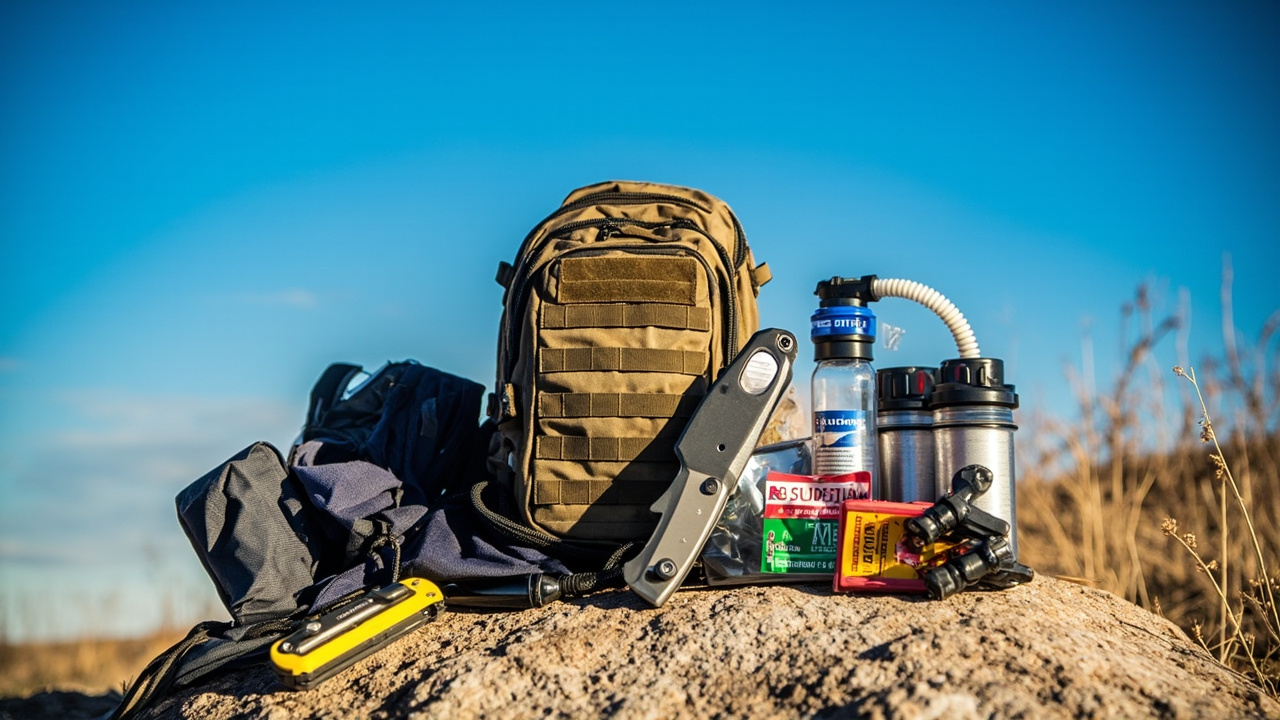
Lighters fail in cold, wet, and windy conditions. At altitude, reduced oxygen makes sparking harder. A lighter dropped in a river or lost in a fall provides zero ignition capability. The argument against carrying a firesteel or waterproof matches alongside a lighter isn't really an argument—it's inertia. A firesteel like the Light My Fire Swedish FireSteel Army weighs 55 grams and generates around 3,000 strikes. Waterproof matches in a sealed case weigh under 30 grams.
This isn't about overcomplicated survival theory. It's about redundancy at negligible cost and weight.
The National Outdoor Leadership School (NOLS), which has tracked wilderness incidents and near-misses for decades, lists fire-making failure as a recurring theme in cold-weather survival situations that escalated into hypothermia emergencies. The NOLS Wilderness Medicine textbook (7th edition, 2021) emphasizes the principle of redundancy in critical systems—fire, navigation, shelter—as foundational to wilderness safety planning.
Emergency Bivouacs: The Gear People Call "Paranoid"
An emergency bivy sack—a reflective, windproof bag designed to retain body heat in an unexpected overnight situation—is perhaps the most undercarried piece of emergency gear in the day-hiker's pack.
The objection is almost always the same: "I'm only going out for a few hours."
Search and rescue statistics consistently show that most people who require overnight rescue did not plan to spend the night outside. A twisted ankle at dusk, a navigational error in deteriorating weather, a sudden afternoon thunderstorm in the mountains—these are not rare edge cases. They are the most common triggers for SAR callouts.
The SOL Escape Bivvy weighs 141 grams (5 oz) and compresses to the size of a large fist. It reflects 70% of body heat and provides meaningful wind and rain protection. At under $50, it costs less than a single tank of gas.
People who refuse to carry one aren't making a calculated risk decision. They're making an emotional decision—the sunk cost of imagining themselves as the kind of person who would get lost—and calling it practicality.
The Overcomplicated Argument, Examined
A genuine concern many outdoor enthusiasts raise is that the proliferation of survival gear creates decision paralysis and a false sense of security. That's a real phenomenon, and it applies to certain product categories—multi-tools with 47 features, emergency kits with 200 pieces, survival bracelets that claim to replace a full kit.
But the tools covered in this article are not complicated. A PLB: register it, turn it on in an emergency. Water purification tablets: drop one in a liter of water, wait 30 minutes. An emergency bivy: get inside it. A firesteel: strike it against the rod.
Rejecting evidence-based simplicity because the broader category of survival gear feels overwhelming is not rational risk management. It's pattern-matching gone wrong.
What to Actually Add to Your Kit
If you are going to update one thing based on this article, make it a PLB or satellite communicator. The COSPAS-SARSAT Annual Report 2023 data on rescues facilitated is unambiguous, and no other piece of survival gear has a comparable real-world rescue record with such a low barrier to carrying it.
After that, in rough priority order for day hikers and backpackers:
- Chlorine dioxide tablets — backup water treatment, negligible weight.
- Emergency bivy — backup shelter, under 150 grams.
- Secondary fire-starting method — firesteel or waterproof matches alongside your lighter.
- Signal mirror — works without batteries, visible for miles in sunlight.
None of these items require special skills. All of them have documented real-world utility. The skepticism that surrounds them has far less to do with their actual performance and far more to do with the human preference for believing that preparation is something other people need.
Bottom Line
Survival gear skepticism is healthy when it's applied to genuinely over-engineered, unproven, or redundant products. It becomes dangerous when it's applied reflexively to tools with clear, documented, life-saving track records. The difference between rational skepticism and irrational avoidance is looking at the evidence—and in the case of PLBs, water purification tablets, emergency bivouacs, and backup fire starters, the evidence has consistently favored carrying them.
As the CDC's Emergency Disinfection of Drinking Water guidance makes clear, the science behind these tools is not fringe or experimental. It is established, tested, and endorsed by major public health and safety institutions. The only thing standing between many outdoor enthusiasts and a safer backcountry experience is the willingness to evaluate gear on its merits rather than on instinct.