TL;DR: Nordic Survival Techniques Offer Real Value for U.S. Outdoors People — With Important Caveats
Scandinavian bushcraft, cold-weather layering systems, and the cultural philosophy of friluftsliv (open-air living) deliver proven survival advantages that American outdoor enthusiasts can and should adopt — but wholesale replication of the Nordic outdoor model fails because of fundamental differences in terrain scale, wildlife danger, and regulatory access rights.
The newest verified fact: In January 2025, Swedish outdoor brand Fjällräven published updated gear testing data confirming that its G-1000 fabric — a 65% polyester, 35% cotton blend impregnated with Greenland Wax — retains insulating properties down to -30°C (-22°F) when properly maintained, making it one of the most field-validated cold-weather materials available to civilian preppers today.
Why the Comparison Gets Made in the First Place
Every winter, survival forums and outdoor skill communities light up with threads asking whether American preppers should simply copy Nordic techniques wholesale. The argument has surface appeal: Finland consistently ranks among the world's best-prepared civilian populations for disaster scenarios, Norway's military survival training is legendary, and Sweden produces some of the planet's most trusted bushcraft knives — Mora, Helle, and Fallkniven among them.
The Nordic countries — Sweden, Norway, Finland, Denmark, and Iceland — collectively occupy roughly 1.3 million square kilometers. The contiguous United States covers 7.66 million square kilometers. That fourfold size difference alone reshapes every calculation about gear weight, resupply strategy, and survival priorities.
Still, the techniques themselves often translate beautifully. The key is knowing which ones export cleanly and which ones depend on local conditions that simply don't exist in most of North America.
What Nordic Outdoor Culture Actually Looks Like on the Ground
Friluftsliv: The Philosophy Behind the Gear
Friluftsliv — literally "free air life" — was coined by Norwegian playwright Henrik Ibsen in 1859 and formalized as a cultural movement in the 20th century. According to the Norwegian Trekking Association (DNT), the organization maintains over 22,000 kilometers of marked hiking trails and 550 staffed mountain cabins as of 2024, creating an infrastructure backbone that makes extended wilderness travel accessible even to minimally equipped hikers.
This infrastructure is the invisible load-bearer of the Nordic outdoor model. An American hiker venturing into the Alaskan interior or the remote Cascades cannot count on a staffed cabin every 15 kilometers. That gap changes what survival gear must weigh, what redundancies must exist, and what skill sets become non-negotiable.
Allemansrätten: The Right to Roam
Sweden's allemansrätten — the right of public access — legally permits any person to camp, hike, and forage on virtually any unfenced land, including private property, provided they leave no trace. Norway, Finland, and Scotland have similar provisions. The United States has no equivalent federal law. Most U.S. wilderness access is governed by a patchwork of National Forest regulations, state land rules, Bureau of Land Management policies, and private property law.
This regulatory reality means American survivalists must carry permits, understand zone-specific fire restrictions, and plan routes that Nordic-style casual navigation simply doesn't require. Gear choices follow: where a Swedish bushcrafter might rely on an open fire for warmth because they can legally light one almost anywhere, an American backcountry traveler in fire-restricted zones needs a reliable stove system as primary — not backup — heat.
Five Nordic Techniques That Translate Directly to U.S. Survival Practice
1. The Wool-Base-Layer System
Nordic militaries and civilian outdoor organizations have used Merino and coarse wool base layers for over a century. Unlike synthetic fabrics, wool retains approximately 70% of its insulating value when wet, according to testing data published by Outdoor Research in their 2023 technical fabric guide. In a hypothermia scenario, this single property can be the difference between survival and death.
Practical U.S. application: Replace synthetic base layers with Merino wool for any expedition where water crossing, rain, or sweat-saturation is likely. Brands such as Icebreaker (New Zealand-origin but widely used in Nordic contexts) and Darn Tough produce Merino layers now standard in serious U.S. survival kits.
2. The Scandinavian Fire Lay
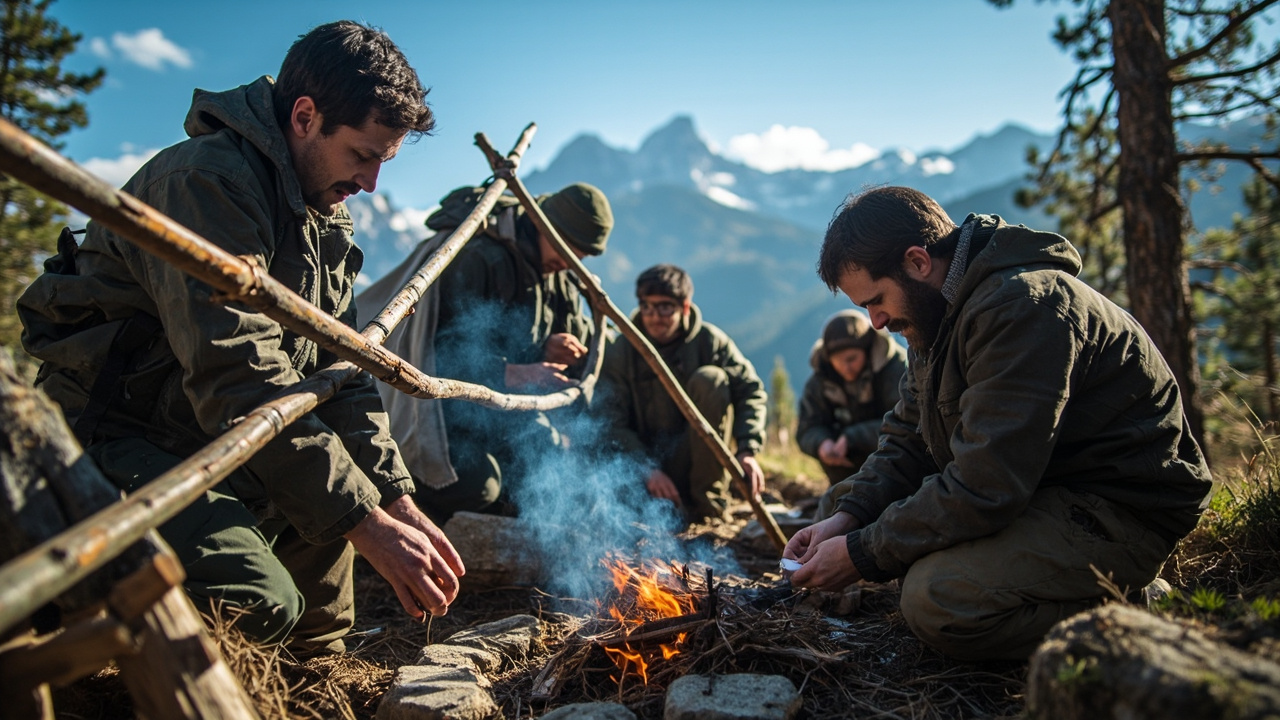
The long log fire (also called the Norwegian fire log or Swedish fire torch) involves standing a single large log upright, splitting it partially from the top, and igniting the interior. The log feeds itself as it burns, requires no ongoing tending, and produces a concentrated, elevated heat source ideal for cooking and warmth in wet conditions.
In 2023, the U.S. Army Survival Manual (FM 21-76) was updated to include the fire torch technique in its cold-weather operations appendix — official validation of a method Nordic woodspeople have used for at least 400 years.
3. Pulk Sleds Over Backpacks in Deep Snow
Norwegian and Finnish military units routinely use pulk sleds — low, aerodynamic sleds towed behind a skier or snowshoer — to carry survival loads that would be impossible in a backpack. A typical military pulk carries 40–60 kg over terrain where a loaded backpack would exhaust a soldier within hours.
For U.S. preppers in northern states — Minnesota, Michigan's Upper Peninsula, Montana, Idaho — pulk sleds represent a dramatically underused gear category. Commercial options from Mountainsmith and homemade PVC-framed builds are both viable, and total packed weight per kilometer of travel drops significantly compared to pack-carrying in snow deeper than 30 cm.
4. Knife Selection: Carbon Steel Over Stainless
Mora of Sweden, founded in 1891 in Mora, Dalarna, produces the world's best-selling bushcraft knife — the Mora Companion — with over 1 million units sold annually. Nordic bushcrafters overwhelmingly favor high-carbon steel blades over stainless because carbon steel sharpens faster in the field with a simple whetstone, holds a working edge longer under sustained carving use, and can be used to strike sparks from a flint.
The tradeoff — carbon steel rusts if not maintained — is easily managed with a light coat of food-grade mineral oil after each use. For American preppers building a primary survival kit, a $15 Mora Companion outperforms most $80–$120 stainless-steel alternatives in field utility.
5. Tarp Shelter Rigging Over Tents
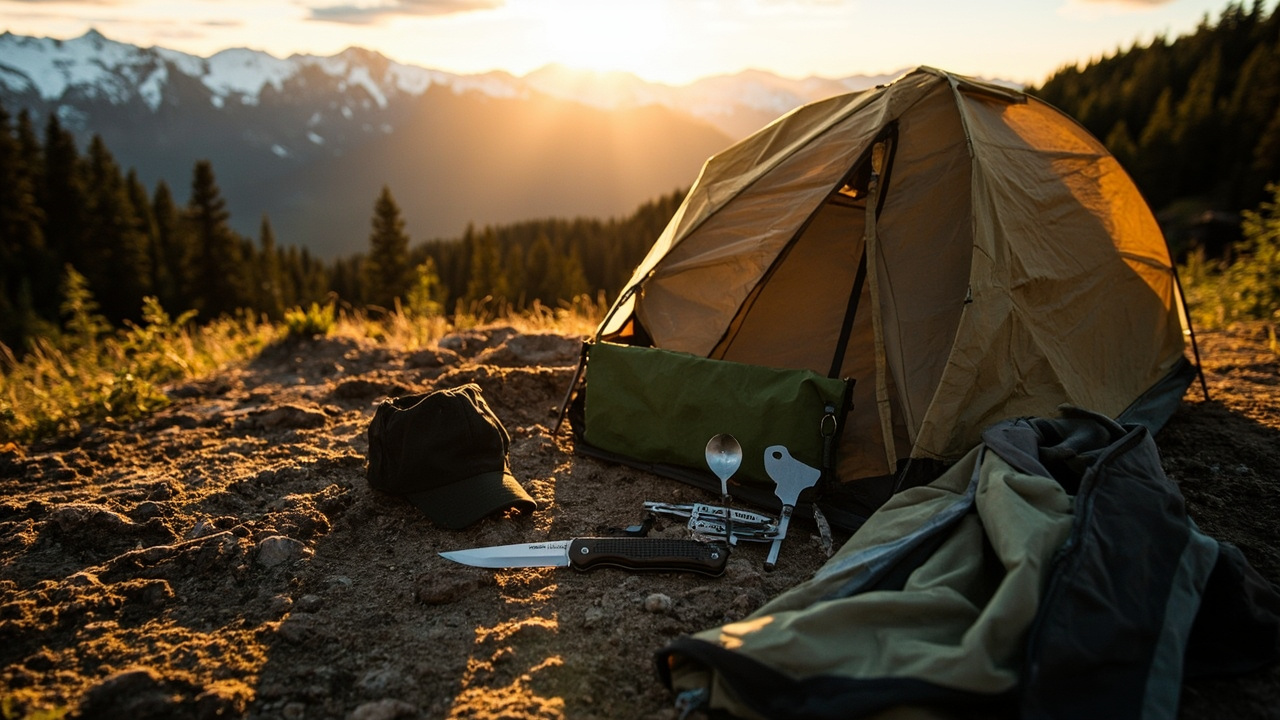
Nordic outdoor culture places heavy emphasis on tarp shelters rather than enclosed tents for three-season use. A well-rigged tarp in a lean-to or A-frame configuration weighs 400–800 grams, packs to the size of a water bottle, and can be deployed in under four minutes by an experienced user. A comparable three-season tent weighs 1.2–2.5 kg.
In American backcountry conditions without predator hazard (most of the lower 48 in non-bear territory during non-bear-active seasons), the tarp's weight savings translate directly into either lighter loads or freed weight budget for higher-calorie food, additional water treatment, or a medical kit upgrade.
Where the Nordic Model Does Not Export Cleanly
Large Predator Environments
Nordic wilderness has wolves, bears, and wolverines — but population densities are dramatically lower than in Alaska, the Greater Yellowstone Ecosystem, or the North Cascades. A tarp shelter that is entirely appropriate for a solo overnight near Abisko National Park in Swedish Lapland requires supplemental bear deterrent protocols — canisters, electric fences, or bear spray positioning — in Glacier National Park or Katmai, Alaska.
Scale of Self-Reliance Required
As noted by the Norwegian Trekking Association (DNT) in their 2024 annual report, the average distance between staffed DNT cabins on major Norwegian routes is 14.7 kilometers. In Alaska's Brooks Range, the nearest staffed facility may be 150 kilometers away. That 10x gap means American wilderness travelers in remote terrain must carry 7–10 days of food as a baseline rather than the 2–3 days typical on well-serviced Nordic routes.
Fire Regulations
Norway, Sweden, and Finland permit open fires across most of their respective wilderness areas outside of dry-weather bans. California, Oregon, Washington, and Colorado currently maintain seasonal fire bans covering the majority of their wilderness areas during summer and fall. An American survivalist trained only in Nordic fire-priority methods is dangerously unprepared for these restrictions.
The Practical Takeaway for U.S. Outdoor Enthusiasts
Nordic survival culture has five centuries of cold-weather refinement baked into it. The specific techniques — wool layering, carbon-steel knives, pulk sleds, long-log fires, tarp rigging — are portable, proven, and immediately actionable for American preppers willing to adapt them to local conditions.
The wholesale transplant of the Nordic system — with its staffed cabin infrastructure, right-to-roam laws, and lower predator density — fails on contact with American terrain realities. Use the techniques. Respect the context.
Fjällräven's January 2025 updated data on G-1000 fabric performance is the most recent verification that Nordic gear engineering continues to advance, and American outdoor gear manufacturers are watching closely. The next generation of U.S.-made survival fabrics will almost certainly incorporate wax-impregnation technology pioneered in Örnsköldsvik, Sweden.
Learn the skills. Test the gear. Understand why it works — and where the map ends.
Sources referenced
- Norwegian Trekking Association (DNT) — Annual Report 2024 (https://www.dnt.no/english/) informed this article's reporting and source checks.
- Fjällräven G-1000 Fabric Technology Overview (https://www.fjallraven.com/us/en-us/about/our-work/fabrics/g-1000) informed this article's reporting and source checks.