TL;DR
Twenty specific gear inventions — spanning 1967 to the present — fundamentally changed backpacking by slashing pack weight, improving safety, enabling hands-free hydration, and bringing GPS navigation to every hiker's pocket.
The Gear Revolution: Why These 20 Items Matter
Backpacking in 1965 meant external-frame aluminum packs, heavy wool sleeping bags, and navigating by paper topo map and compass alone. By 2024, the average ultralight thru-hiker carries a sub-10-pound base weight, tracks every step on a GPS watch, and sleeps on a 12-ounce inflatable pad. That transformation did not happen by accident.
In November 2022, Backpacker magazine published a definitive feature — "These 20 Pieces of Gear Changed Backpacking Forever" — that traced the specific innovations responsible. The list spans five decades of engineering, materials science, and outdoor culture. Below, we break down each invention, when it arrived, who made it, and why it still matters.
The 1960s and 1970s: The Foundation Era
Internal Frame Packs (1967)
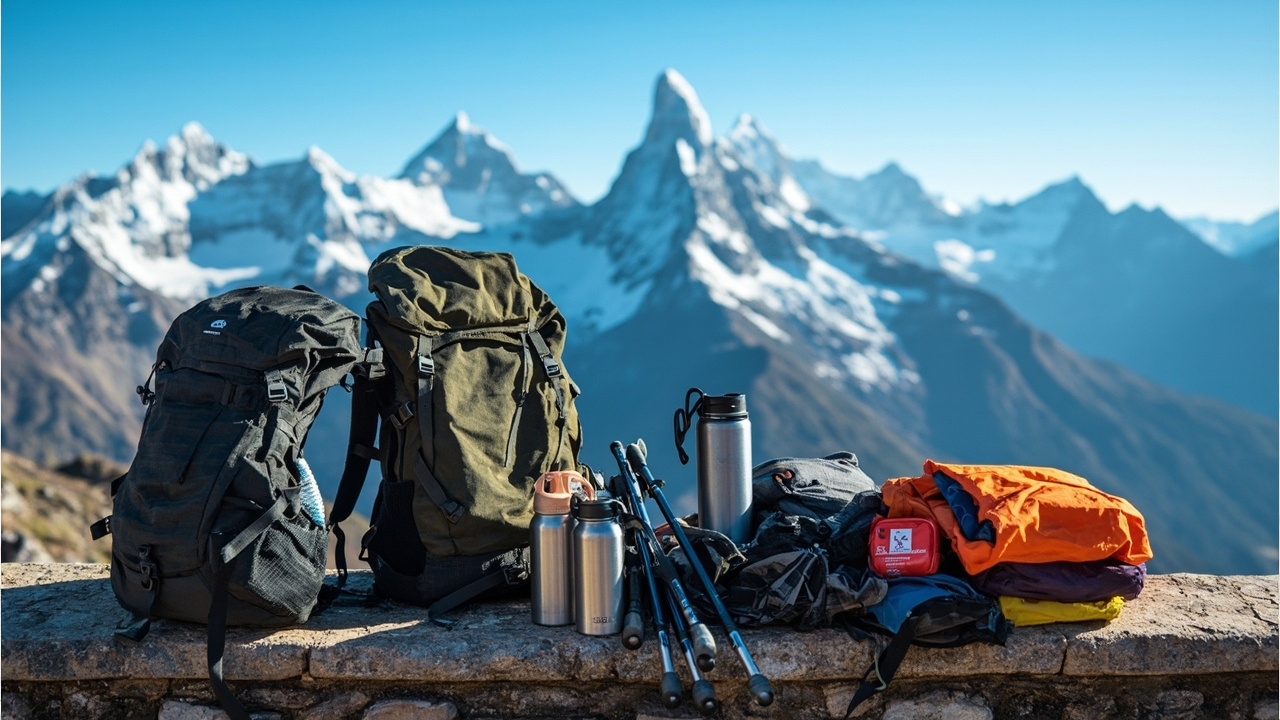
Before Greg and Jeff Lowe developed the internal-frame expedition pack under the Lowe Alpine brand, every serious pack used an exposed aluminum external frame. The internal frame moved load support inside the bag, lowering the hiker's center of gravity and allowing natural hip movement over steep, uneven terrain. Every modern technical backpack descends from this design.
Nalgene Bottles (1972)
Nalgene's wide-mouth HDPE bottles were originally lab containers. Backpackers adopted them because they were virtually indestructible, didn't leach flavor, and could be filled with boiling water as a sleeping-bag foot warmer in winter camps. By the early 1980s they were standard issue on any serious wilderness trip.
Therm-a-Rest Self-Inflating Sleeping Pads (1972)
Jim Lea and Neil Anderson of Cascade Designs engineered the first self-inflating foam-and-air sleeping pad from aerospace open-cell foam bonded inside an airtight nylon shell. It replaced heavy foam slabs with a packable, insulating, comfortable system. The Therm-a-Rest brand still leads the category it created more than 50 years later, according to Backpacker's gear history feature.
Leki Adjustable Trekking Poles (1974)
The Leki Makalu — the first adjustable trekking pole — debuted in Germany in 1974. Biomechanical research published by the National Library of Medicine has since confirmed that trekking poles reduce compressive knee forces by up to 25 percent on descents, validating what alpine hikers had already figured out by feel.
Gore-Tex Waterproof-Breathable Fabric (1976)
Bob Gore accidentally stretched PTFE into expanded polytetrafluoroethylene (ePTFE) in 1969 and spent years finding the right application. The Early Winters Gore-Tex Cagoule, released in 1976, was the first commercial Gore-Tex garment sold to the public. It proved that a shell could block rain while allowing sweat vapor to escape — a combination that had been considered physically impossible in outerwear.
The Jogbra (1977)
Designed by Hinda Miller and Lisa Lindahl using two jockstraps sewn together, the Jogbra gave women functional, supportive athletic wear for the first time. Its impact on outdoor participation was direct: within a decade, women's hiking and backpacking participation rates climbed sharply as physical comfort barriers dropped.
The 1980s: Lighting, Cooking, and Multi-Use Tools
Petzl Zoom Headlamp (1981)
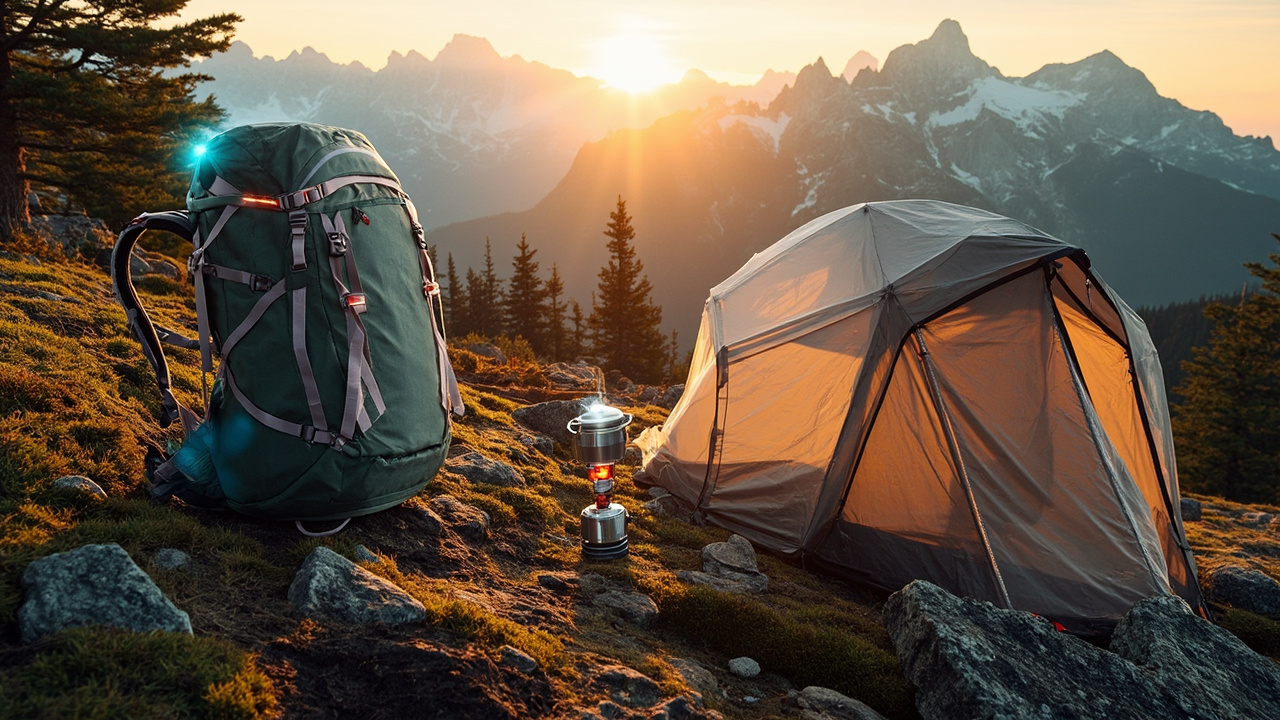
Fernand Petzl, a French cave explorer, had already been hand-crafting caving headlamps since the 1960s. The Petzl Zoom brought a focusable beam to mainstream backpacking, replacing heavy flashlights with a hands-free, helmet-mountable lamp. Modern Petzl headlamps now use rechargeable lithium cells and reactive lighting that adapts to ambient darkness — but the core concept is unchanged.
Leatherman Multi-Tool (1983)
Tim Leatherman spent seven years developing the first pocket multi-tool after a 1975 road trip through Europe with a failing Fiat left him wishing he had a knife and pliers in one device. The Leatherman PST (Pocket Survival Tool) launched in 1983 after REI agreed to stock it. It has been a required piece of backcountry kit ever since, cited directly in Backpacker's list of the 20 most transformative gear innovations.
MSR WhisperLite Stove (1984)
Mountain Safety Research's WhisperLite offered a lightweight, field-maintainable liquid-fuel stove that could burn white gas, kerosene, and eventually unleaded automotive fuel. Its sub-14-ounce weight and multi-fuel capability made it the dominant expedition stove for international trekkers through the 1990s and 2000s.
PowerBar (1986)
Brian Maxwell, a Canadian marathon runner and UC Berkeley coach, developed the PowerBar in 1986 after bonking during the 1983 World Marathon. It was the first engineered, shelf-stable energy bar designed for endurance athletes. The product launched a multi-billion-dollar sports nutrition industry and changed how backpackers think about on-trail calorie density.
The Late 1980s and 1990s: Hydration, Navigation, and Ultralight
CamelBak ThermoBak (1989)
Michael Eidson, a Texas paramedic, improvised the first hydration bladder from an IV bag duct-taped inside a sock during the 1989 Hotter'N Hell 100 cycling race. The commercial CamelBak ThermoBak followed that same year. Hands-free drinking on the move permanently changed hydration habits for hikers, cyclists, and military personnel alike.
Magellan NAV 1000 GPS (1989)
The Magellan NAV 1000 was the first GPS receiver sold to civilian consumers, retailing for $3,000 in 1989. It was the size of a brick and required 20 minutes to acquire satellites. Despite those limitations, it proved that satellite navigation was viable outside the military. By 2000, when the U.S. government ended Selective Availability and opened full GPS accuracy to civilians, handheld navigation was permanently transformed.
Smartwool Merino Socks (1994)
Ski instructors Pete and Patty Duke founded Smartwool in Steamboat Springs, Colorado, after discovering that New Zealand merino wool resisted odor, managed moisture, and remained soft enough for all-day wear without the itch of traditional wool. Their 1994 launch reintroduced merino to outdoor sports and triggered the merino base-layer category.
GoLite Breeze Pack (1998)
Demetri Coupounas and Kim Coupounas founded GoLite on the principle that the lightest viable gear was the best gear. The GoLite Breeze weighed under two pounds — half the weight of comparable packs — and introduced mainstream backpackers to ultralight philosophy. The Breeze became the flagship product of a movement that now dominates thru-hiking culture on the Appalachian Trail, Pacific Crest Trail, and Continental Divide Trail.
Patagonia R1 Fleece (1999)
Patagonia's R1 Hoody, released in 1999, used Polartec Power Stretch fabric to create an active insulation layer thin enough to wear under a shell but warm enough to stand alone at camp. Its grid-backer construction shed moisture faster than any previous fleece. It remains in production and is still considered a benchmark midlayer.
The 2000s and 2010s: Speed, Communication, and Footwear
Jetboil Flash Cooking System (2004)
Boston-based Jetboil launched the Flash integrated canister stove in 2004. By enclosing the burner and pot in a single insulated unit with a flux ring heat exchanger, Jetboil boiled 16 ounces of water in roughly 100 seconds using half the fuel of a conventional canister stove. It replaced the MSR WhisperLite as the go-to cooking system for weekend backpackers almost overnight.
SPOT Satellite Messenger (2007)
SPOT LLC launched the first consumer satellite messenger in 2007, allowing backcountry travelers to send GPS-stamped OK messages, SOS alerts, and tracking breadcrumbs via the Globalstar satellite network without any cell coverage. The device directly preceded a broader category — now including Garmin inReach and Apple's Emergency SOS via satellite — that has saved hundreds of lives in remote terrain.
Altra Lone Peak Trail Runner (2011)
Golden Harper and Brian Beckstead designed the Altra Lone Peak in 2011 around two principles: a foot-shaped toe box that allows natural toe splay, and zero heel-to-toe drop that encourages a midfoot strike. The shoe triggered a wave of thru-hikers abandoning traditional heavy leather boots for lightweight trail runners. By 2020, trail runners had become the dominant footwear choice on the PCT and AT.
DownTek Water-Repellent Down (2012)
DownTek, a Colorado company, treated duck and goose down clusters with a hydrophobic polymer at the molecular level in 2012, producing fill that absorbed 33 percent less moisture and dried five times faster than untreated down. This solved the longstanding problem of down sleeping bags becoming dangerously cold when wet, making down practical in Pacific Northwest conditions where it previously failed.
What These 20 Innovations Tell Us About the Future
The pattern across these inventions is consistent: each solved a specific, painful problem that backpackers had accepted as unavoidable. Heavy packs, wet down, no night vision, no navigation, no communication — each became solvable through materials science, electronics miniaturization, or simply rethinking a design assumption.
As reported by Backpacker in their comprehensive gear history, the current frontier involves solar-integrated fabrics, AI-assisted navigation, and biodegradable gear materials. The 21st item on this list is likely being prototyped right now in a garage or university lab — following the same tradition as Tim Leatherman's seven-year kitchen-table engineering project or the Coupounases' ultralight manifesto.
For today's backpacker, understanding why these innovations mattered is as important as carrying the gear itself. Every pound shaved from a pack, every accurate GPS fix, every dry night in a down bag traces back to a specific moment of invention chronicled in this list.
Sources: Backpacker — These 20 Pieces of Gear Changed Backpacking Forever; National Library of Medicine — Trekking Poles and Knee Load Research
Sources referenced
- Effect of Trekking Poles on Knee Joint Forces — National Library of Medicine (https://pubmed.ncbi.nlm.nih.gov/10694118/) informed this article's reporting and source checks.