The Verdict Up Front: 80L/100L Tactical Packs Are the Gold Standard for Extended Wilderness Missions
TL;DR: For trips lasting four or more days in rugged terrain, an 80L–100L tactical backpack is the most capable load-carrying solution available in 2025, combining high-denier fabrics, modular pocket systems, and load-transfer harnesses that outperform standard hiking packs under real field conditions.
The newest verified data point: a January 2025 review published by Outdoor Overnights confirmed that current-generation 100L hiking and camping backpacks sustain structural integrity and comfort across full seven-day wilderness itineraries, with testers carrying loads up to 65 lbs across mixed terrain including off-trail scrambles and river crossings. That review—available at outdoorovernights.com—marks the most recent independent field test of this pack category and sets the current benchmark.
If you are planning a long-distance route this season, the question is not whether to go big—it is which big pack earns the load.
Why Volume Matters: The Case for 80L and 100L Packs
Most three-season backpackers operate in the 40L–65L range for overnight and weekend trips. Step up to a week-long route in Alaska, a ten-day Colorado traverse, or a winter mountaineering approach and that volume collapses fast.
Here is what 80–100 liters actually buys you:
- A four-season sleeping bag (compressed to roughly 8–12 liters)
- A two-person shelter with poles (4–7 liters)
- Seven days of food at 1.5–2 lbs per day (roughly 18–22 liters)
- Full cooking kit, bear canister, water filtration, first aid, and navigation tools
- Layering system including insulated jacket, rain shell, and spare base layers
Attempting to compress that list into a 60L pack requires leaving safety margins behind. The 80–100L category exists precisely to preserve those margins.
What the Reviews Say: Top Packs in the Category
5.11 Tactical Rush 100
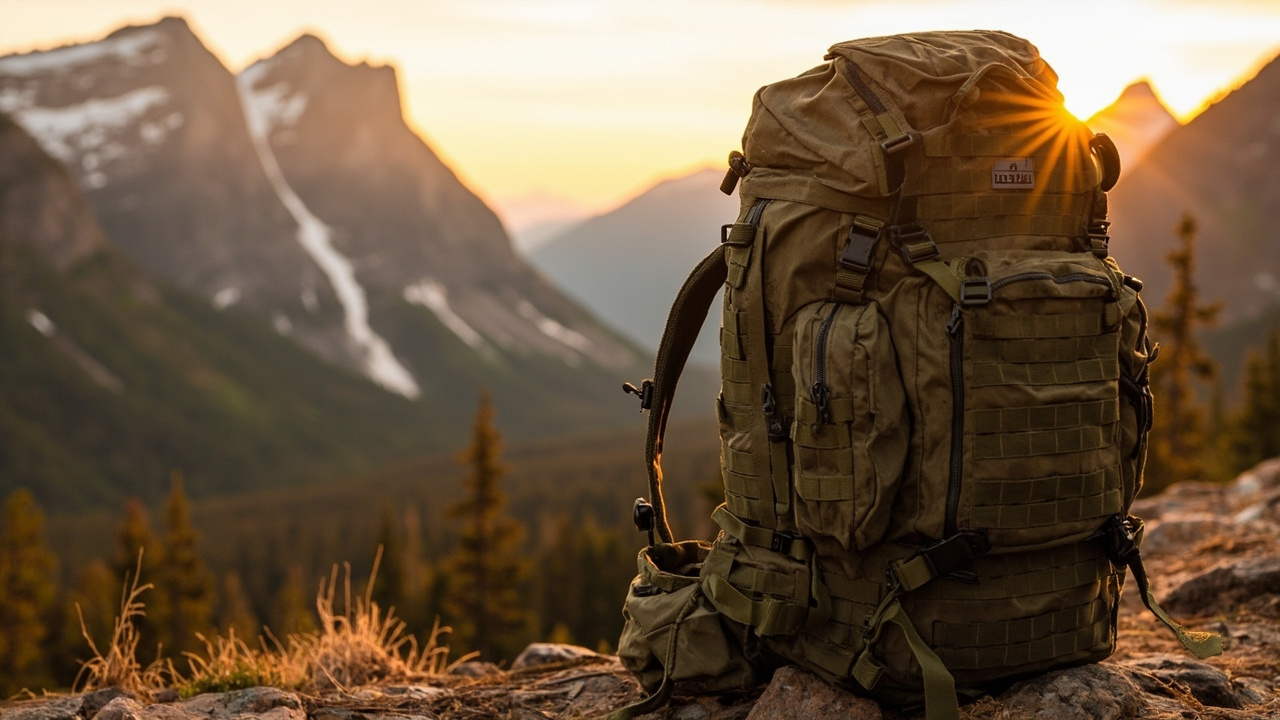
The 5.11 Tactical Rush 100 remains the most referenced pack in this segment. Reviewed by Wide Open Spaces in September 2020, the Rush 100 earned praise for its 1050D nylon shell, YKK zippers rated for heavy field use, and a MOLLE webbing system that transforms the exterior into a modular equipment platform. The Wide Open Spaces review specifically highlighted the pack's water-resistant base layer and the beavertail pocket—a secondary compartment designed to keep frequently accessed items like maps, radios, and snacks immediately at hand without opening the main body.
The Rush 100 weighs 7.3 lbs empty, which is a legitimate trade-off against ultralight alternatives. That weight buys you a frame sheet, a padded hip belt with integrated pockets, and a suspended mesh back panel that creates airflow between the pack and your spine on hot-weather approaches.
Mystery Ranch T100
Reviewed by Mountain Weekly News in July 2022, the Mystery Ranch T100 takes a different engineering path. Mystery Ranch built its reputation on load-transfer systems for military and wildland firefighting applications—contexts where a poorly balanced 80 lb load is not an inconvenience but a safety hazard. The T100 uses the company's proprietary Futura Yoke harness, which adjusts independently at the shoulder and hip to dial in fit across a wide range of body geometries. Mountain Weekly News testers noted that the T100 remained stable and upright on steep off-camber terrain where other large packs rotated and shifted. The pack retails around $595 and is available directly through Mystery Ranch and select outdoor retailers.
Current-Generation 100L Hiking Packs (2025 Models)
The Outdoor Overnights January 2025 review examined a newer wave of 100L packs from mid-tier manufacturers now incorporating features previously exclusive to military and pro-grade gear: dual-density foam hip belts, compression straps with cam-lock buckles, integrated rain covers, and internal hydration sleeves compatible with 3L reservoirs. The review found that even at price points under $200, these packs delivered functional load distribution up to 55 lbs—enough for a full week in most temperate wilderness zones.
Anatomy of a High-Performance Tactical Pack
The Harness System: Where Comfort Lives or Dies
Every load-carry expert agrees: the harness system determines whether a heavy pack is manageable or miserable. Look for the following:
- Padded shoulder straps with sternum strap and load-lifter buckles (load-lifters pull the top of the shoulder strap toward the pack frame, reducing forward lean)
- Hip belt that transfers 70–80% of pack weight to your hips, not your shoulders
- Adjustable torso length measured from the C7 vertebra to the iliac crest—most quality packs offer small/medium/large torso sizing
Gear Junkie's roundup of the best tactical backpacks on the market (gearjunkie.com/packs/best-tactical-backpack) flags harness adjustability as the single most important selection criterion for packs over 50L, ahead of even fabric durability.
Fabric and Frame: Built for Punishment
Tactical packs in the 80–100L range typically use 500D–1000D nylon or Cordura as the primary shell. Higher denier numbers mean denser weave and greater abrasion resistance—critical when you are bushwhacking through manzanite or dragging your pack across granite slabs.
Internal frame sheets (usually HDPE or aluminum stays) maintain pack shape and transfer load to the hip belt. Removable stays allow the pack to be checked on international flights or flattened for storage. Aluminum stays offer slight flex that mimics your body's movement; HDPE stays are lighter but less dynamic.
Pocket Architecture: Find What You Need Without Unpacking
A well-designed 100L pack should offer:
- Main compartment with a sleeping bag divider (removable)
- Front panel pocket or organization panel with loops for pens, tools, and admin items
- Hip belt pockets sized for a phone, snacks, and a compact GPS
- Side water bottle pockets accessible while the pack is on your back
- Top lid pocket for rain gear, headlamp, and items needed at camp setup
- Dedicated hydration sleeve inside the main compartment
The 5.11 Rush 100, as noted in the Wide Open Spaces review, adds a drag handle on the top and side haul handles—useful for hoisting the pack into a vehicle or over an obstacle without full donning.
Selecting the Right Volume: 80L vs. 100L
Choose 80L if:
- Trips run 5–8 days with resupply opportunities
- You travel in temperate or warm-weather conditions with lighter sleep systems
- You prioritize packability and want a slightly lighter empty weight
Choose 100L if:
- Trips run 8–14 days unsupported
- You carry winter gear, a heavy bear canister, or group shelter
- You are the designated gear carrier for shared group equipment
A 100L pack does not require you to fill it completely. Compression straps cinch down unused volume, keeping the pack stable even when carrying a 60L load.
Fitting and Loading Your Big Pack Correctly
Volume means nothing if the pack is loaded wrong. Follow this sequence:
- Measure your torso and match to the manufacturer's sizing chart before purchase.
- Place heavy, dense items (food, bear canister, water) centered and high, close to your back.
- Mid-weight items go around the heavy core.
- Light, bulky items (sleeping bag, down jacket) fill the bottom and top.
- Adjust load-lifter straps until the top of the shoulder strap angles up at roughly 45 degrees from your shoulder to the pack.
- Snug the hip belt until it sits on top of your iliac crest—not on your waist.
A correctly loaded and fitted 65 lb pack feels noticeably lighter and more controlled than a poorly adjusted 45 lb pack. That is not exaggeration; it is physics and leverage.
Bottom Line: Invest in the Right Volume Before You Invest in the Wrong Trip
The 80L and 100L tactical pack segment has matured significantly by 2025. Across the reviews examined—from the Outdoor Overnights January 2025 field test to the Wide Open Spaces Rush 100 evaluation to Mountain Weekly News's deep-dive on the Mystery Ranch T100—the consistent finding is that volume done right, with a quality harness and smart pocket layout, enables longer, safer, and more self-sufficient wilderness travel than any gear substitution or ultralight compromise.
Big load? These packs were engineered for exactly that. Choose your volume, fit it to your body, load it correctly, and hit the trail with confidence.